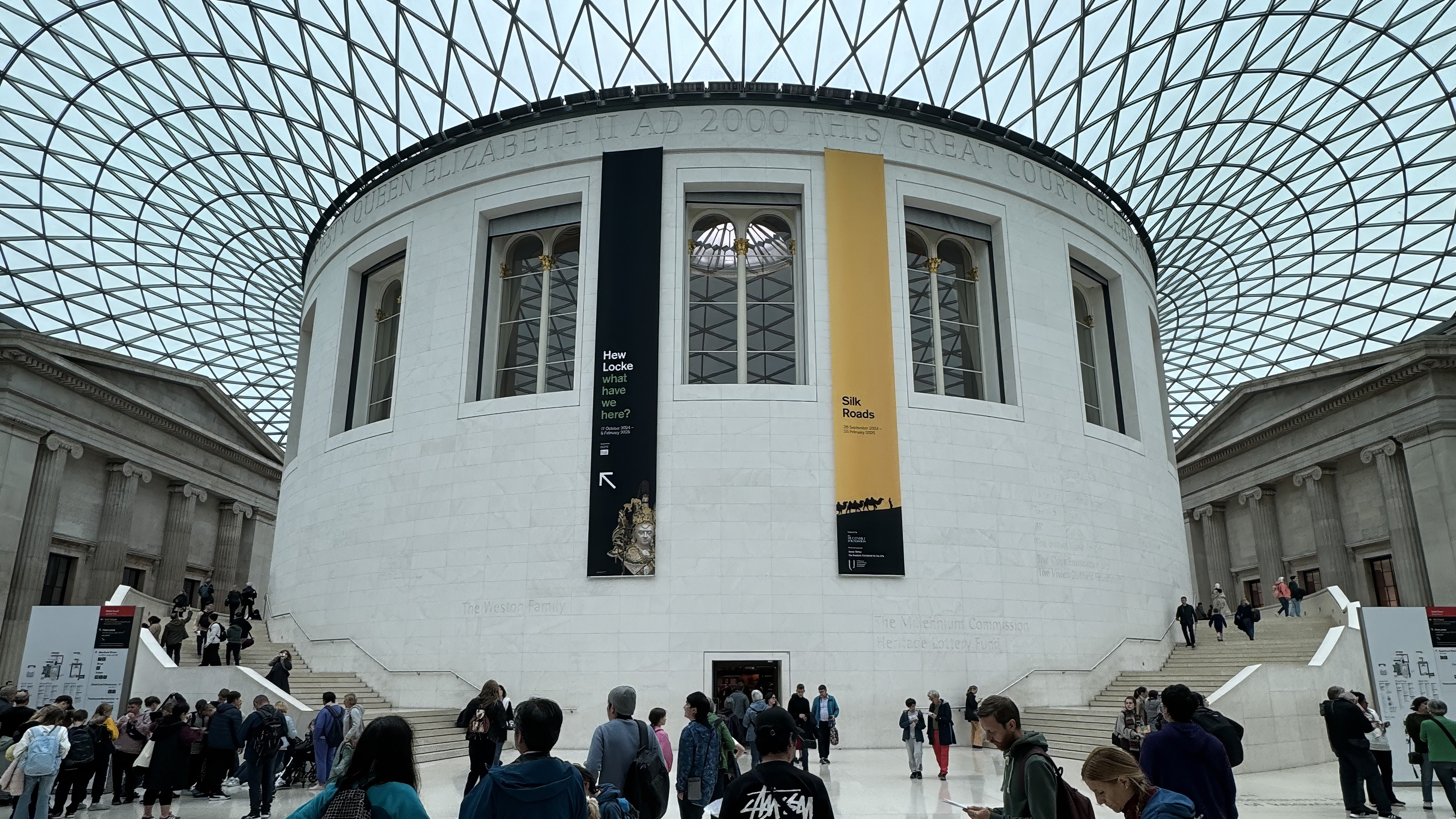
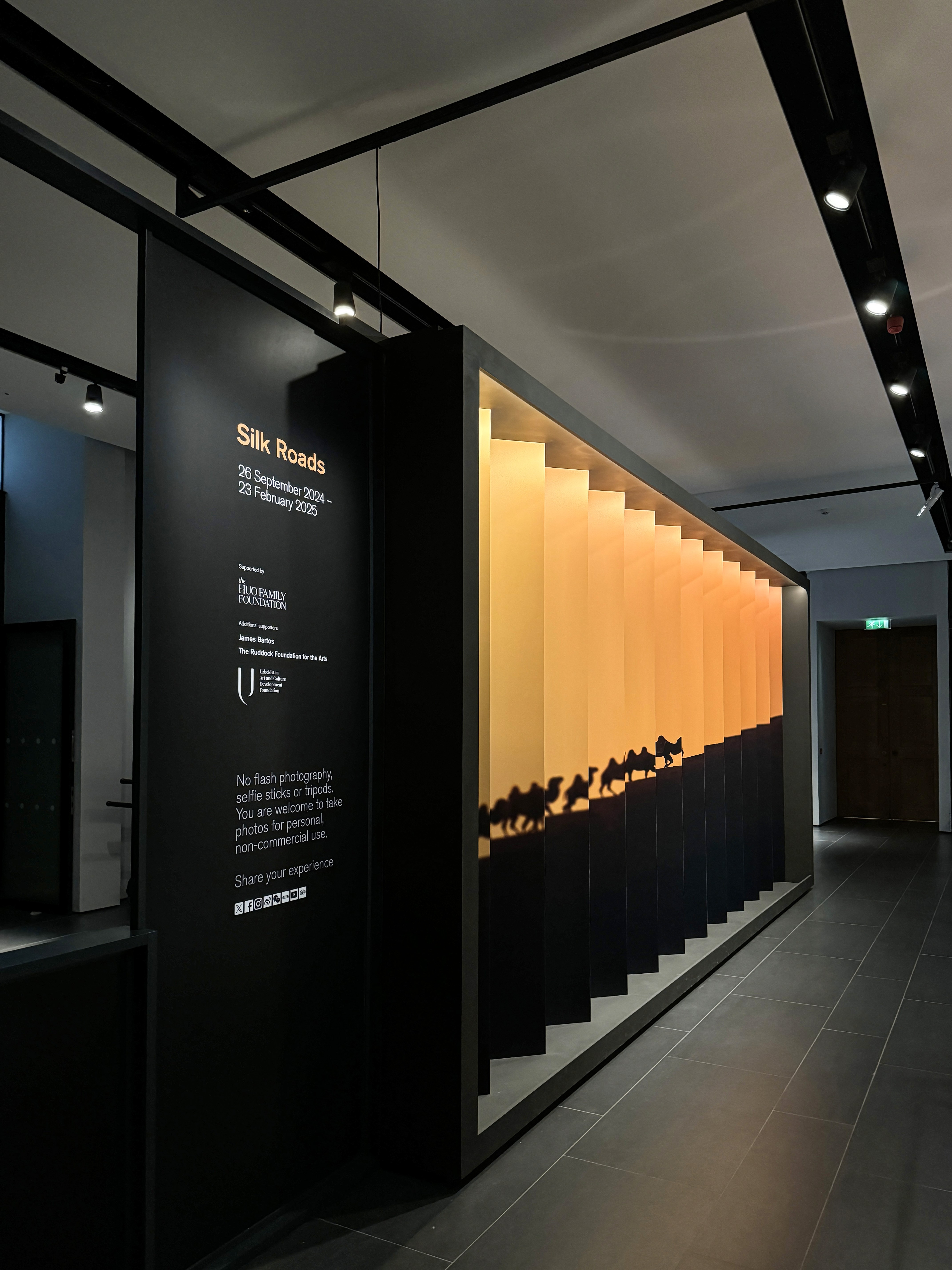
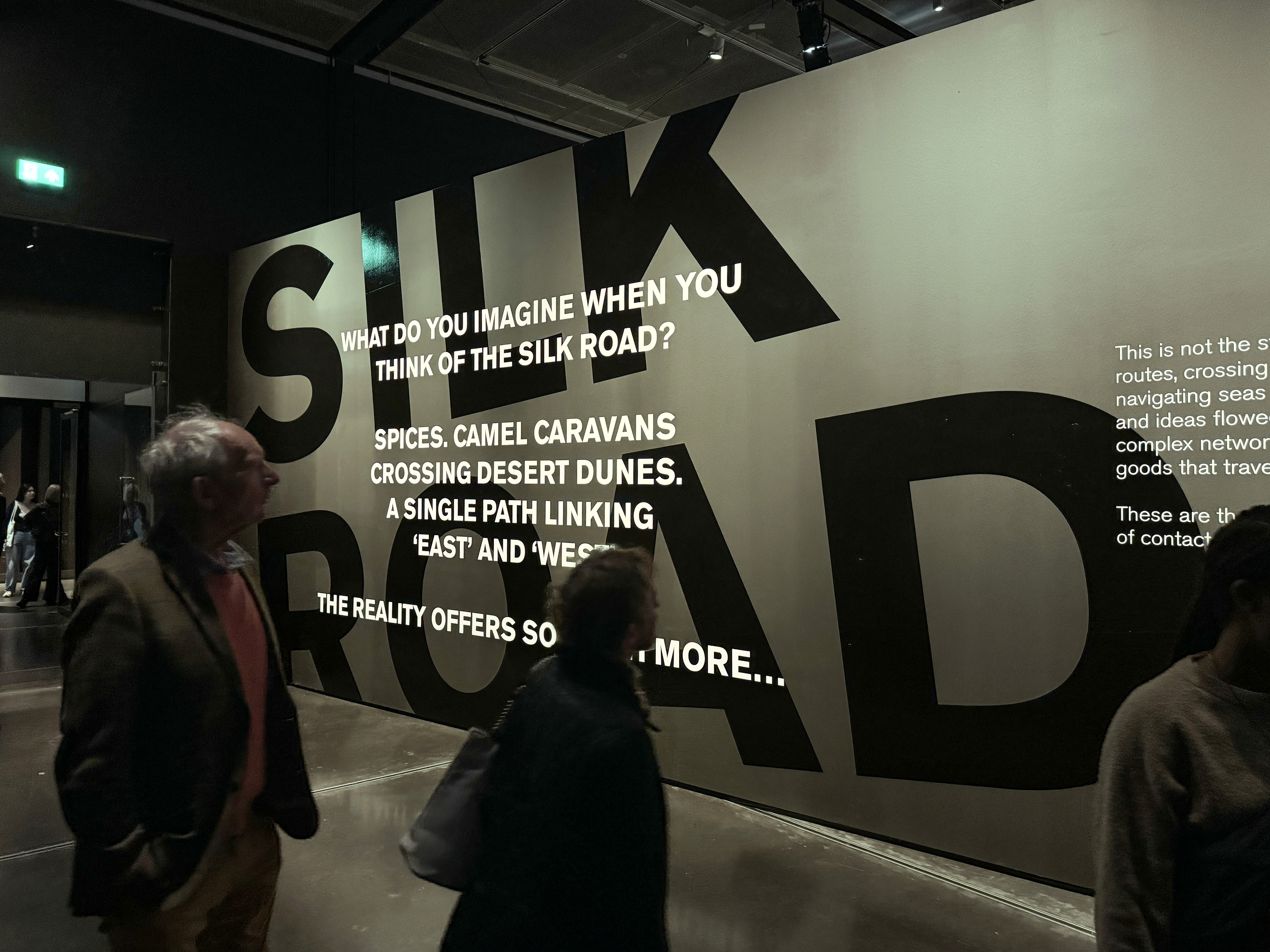
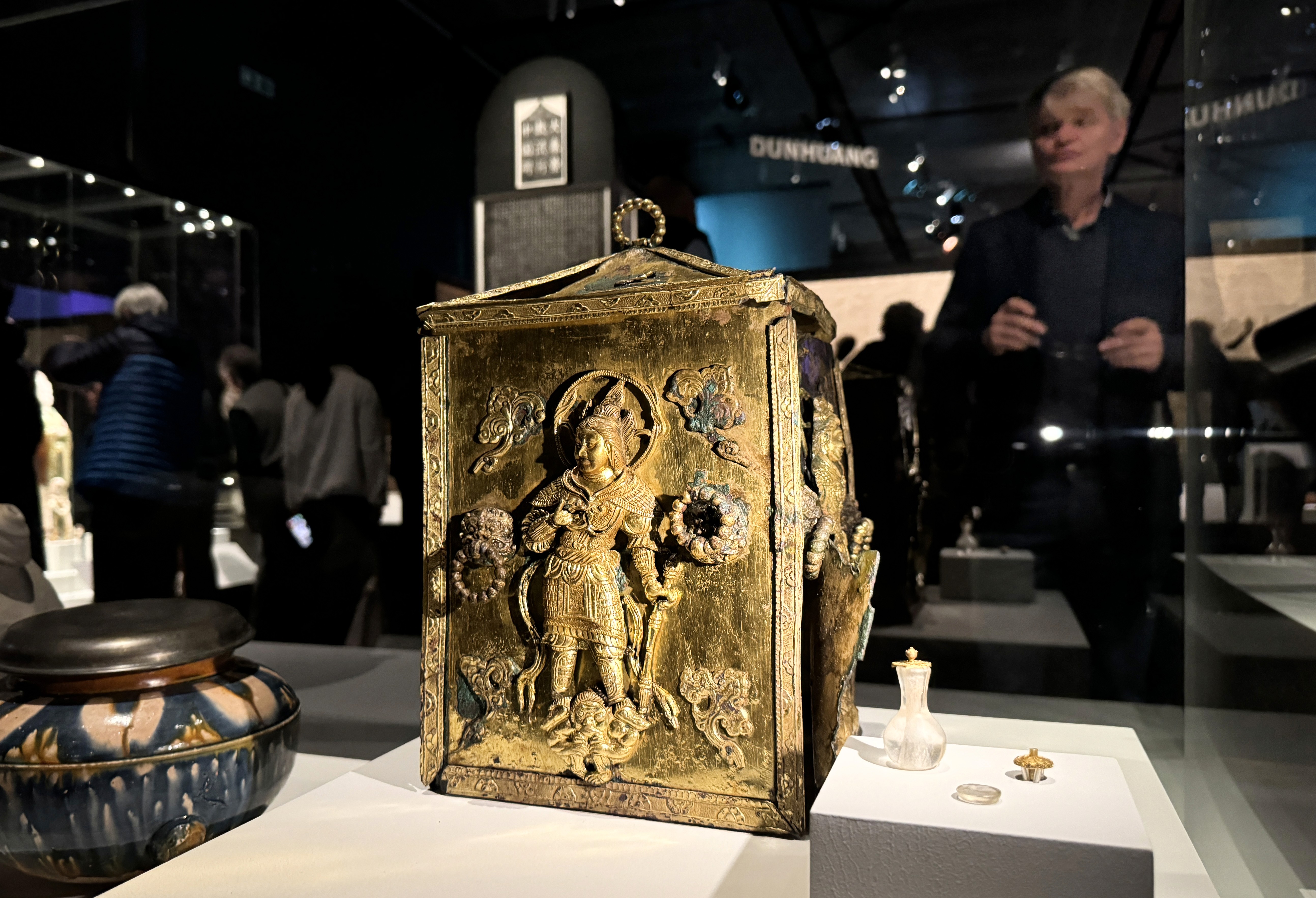
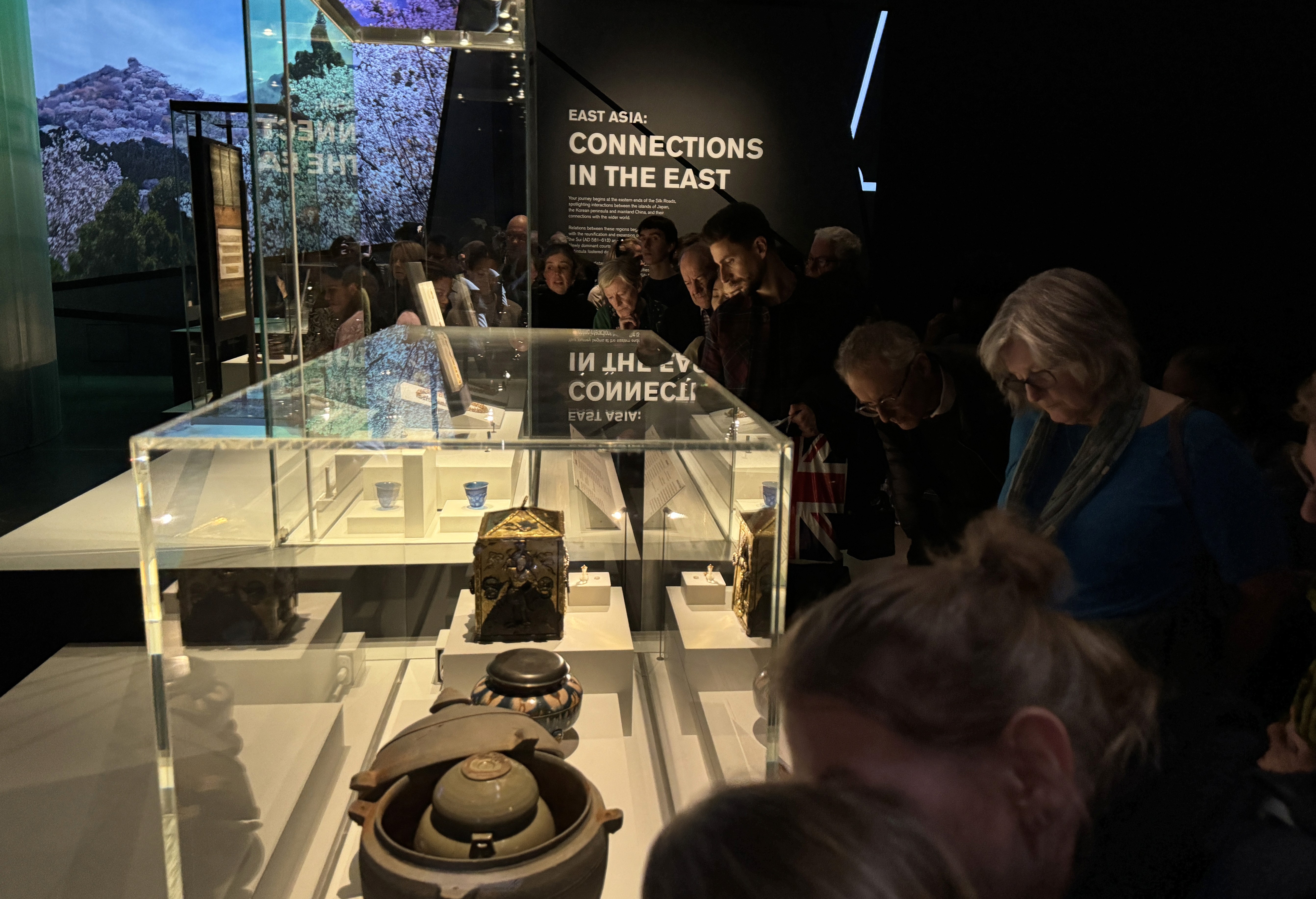
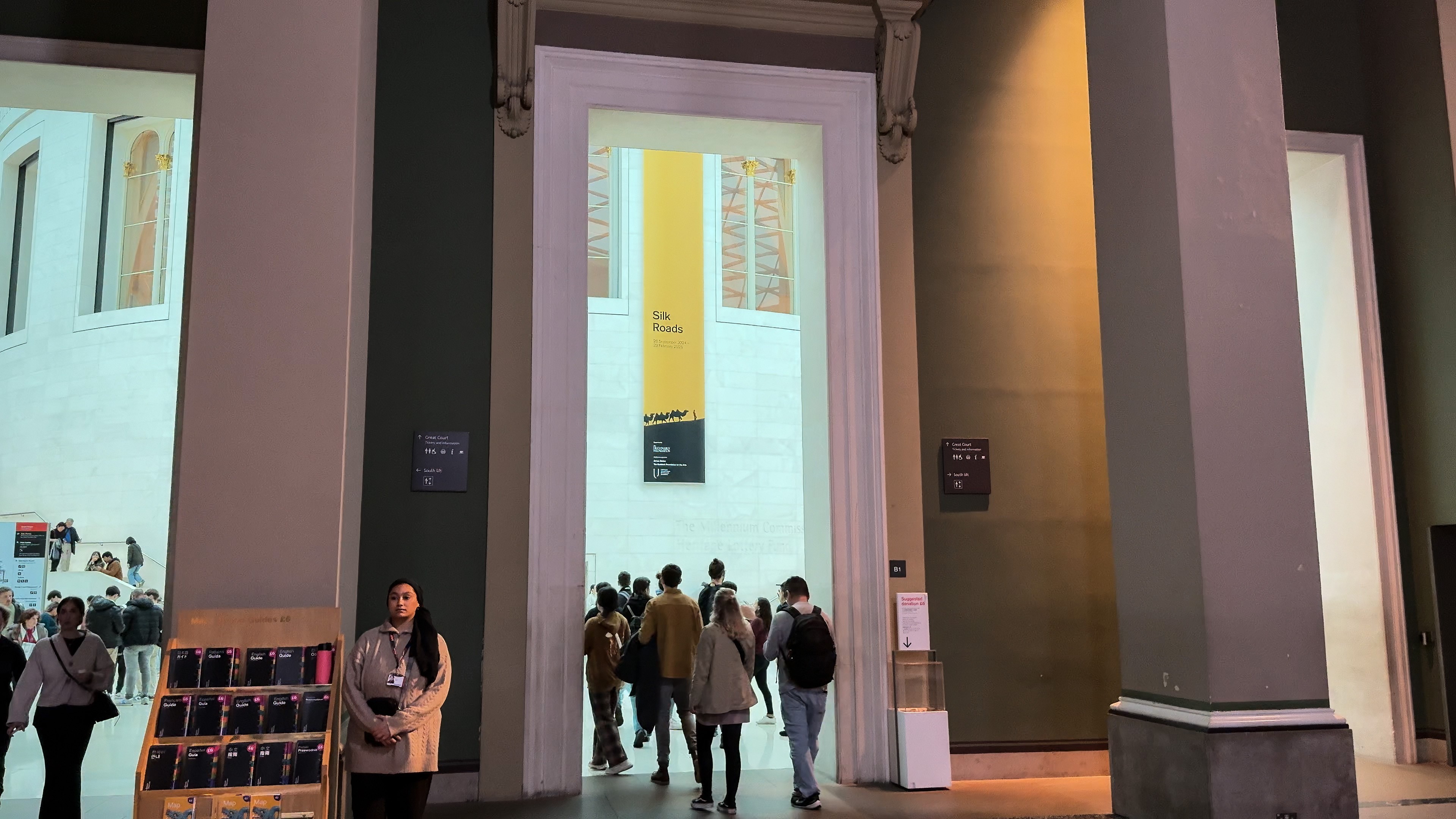
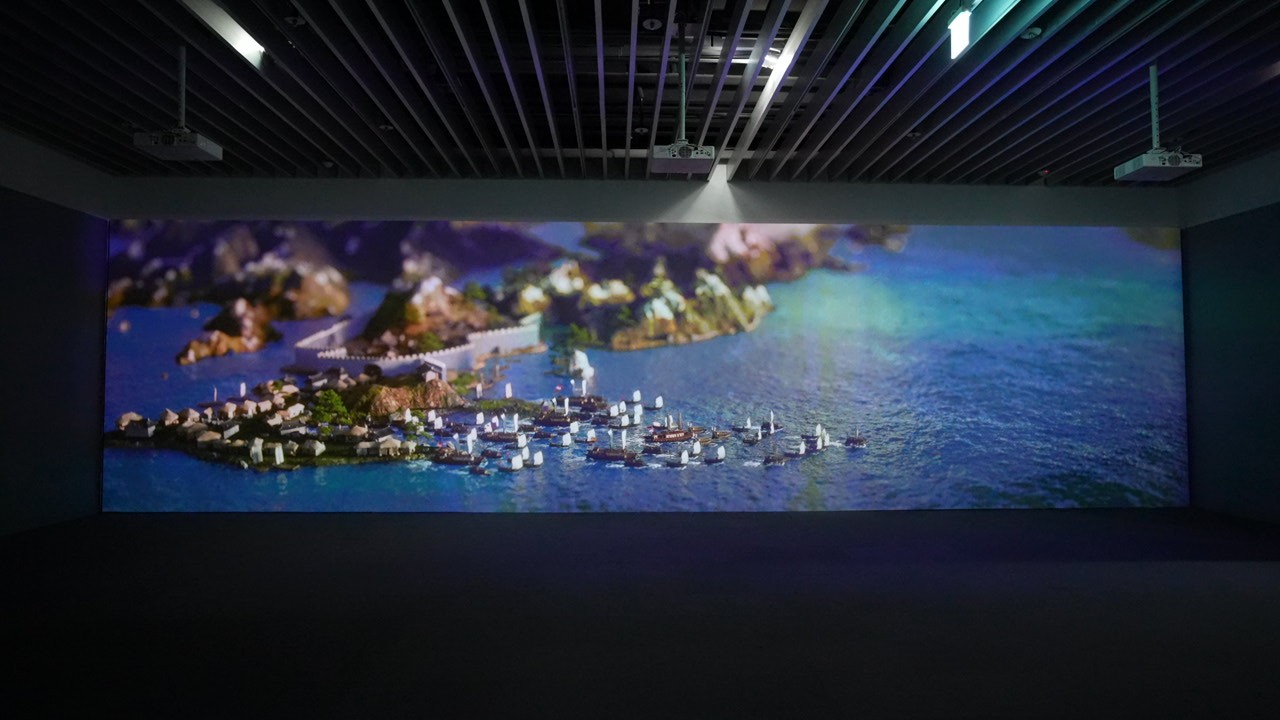
The British Museum’s special exhibition on the Silk Roads was a major international project that reexamined the vast networks of trade and cultural exchange spanning the Eurasian continent. Held from September 26, 2024 to February 23, 2025, the exhibition presented a broad civilizational narrative extending from East Asia to Western Europe.
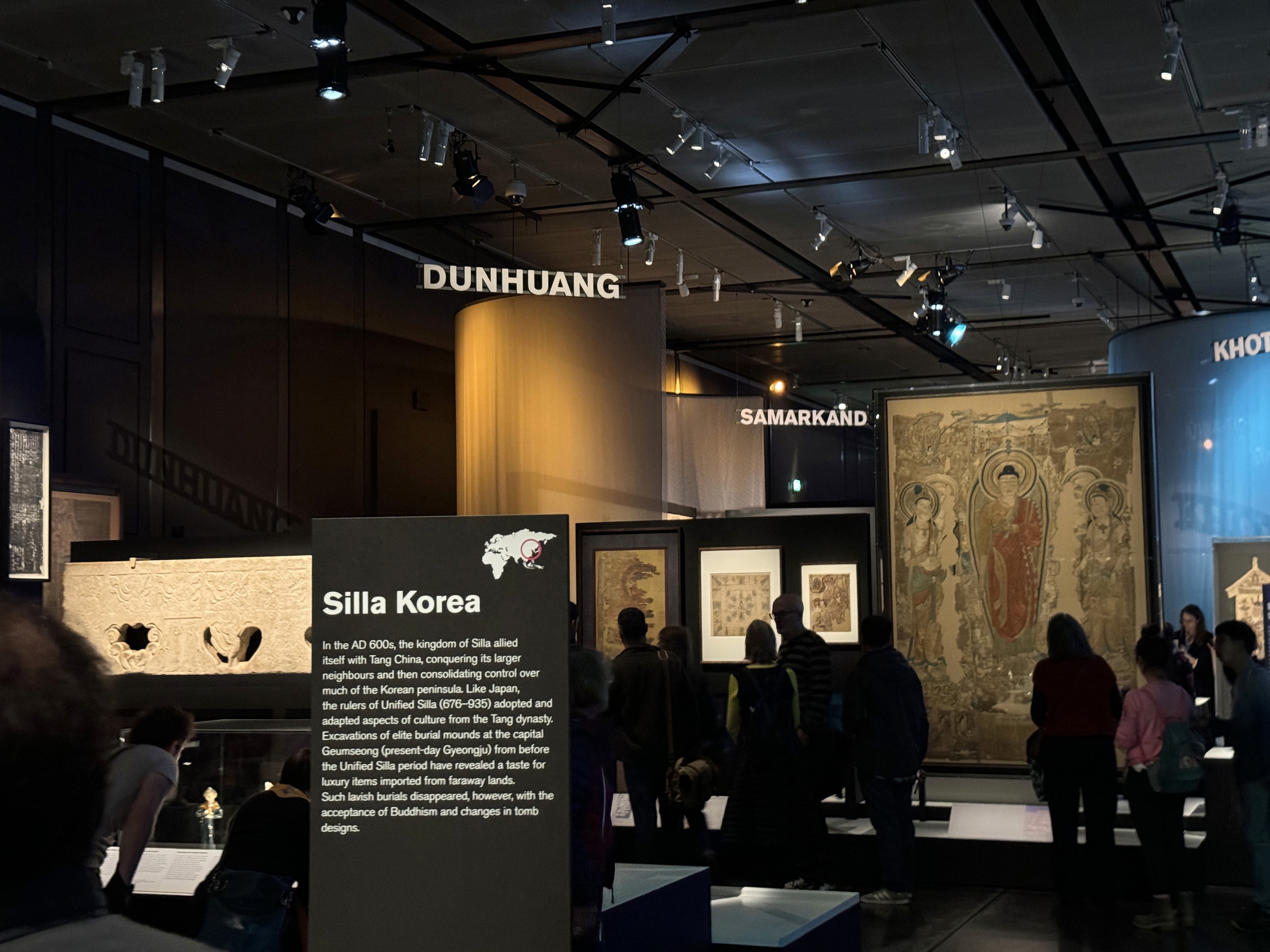
Structured on a monumental scale, the exhibition traced the key civilizations and cities that shaped the Silk Roads, revealing that the Silk Roads were not a single route but an interconnected network linking societies across Asia and Europe.
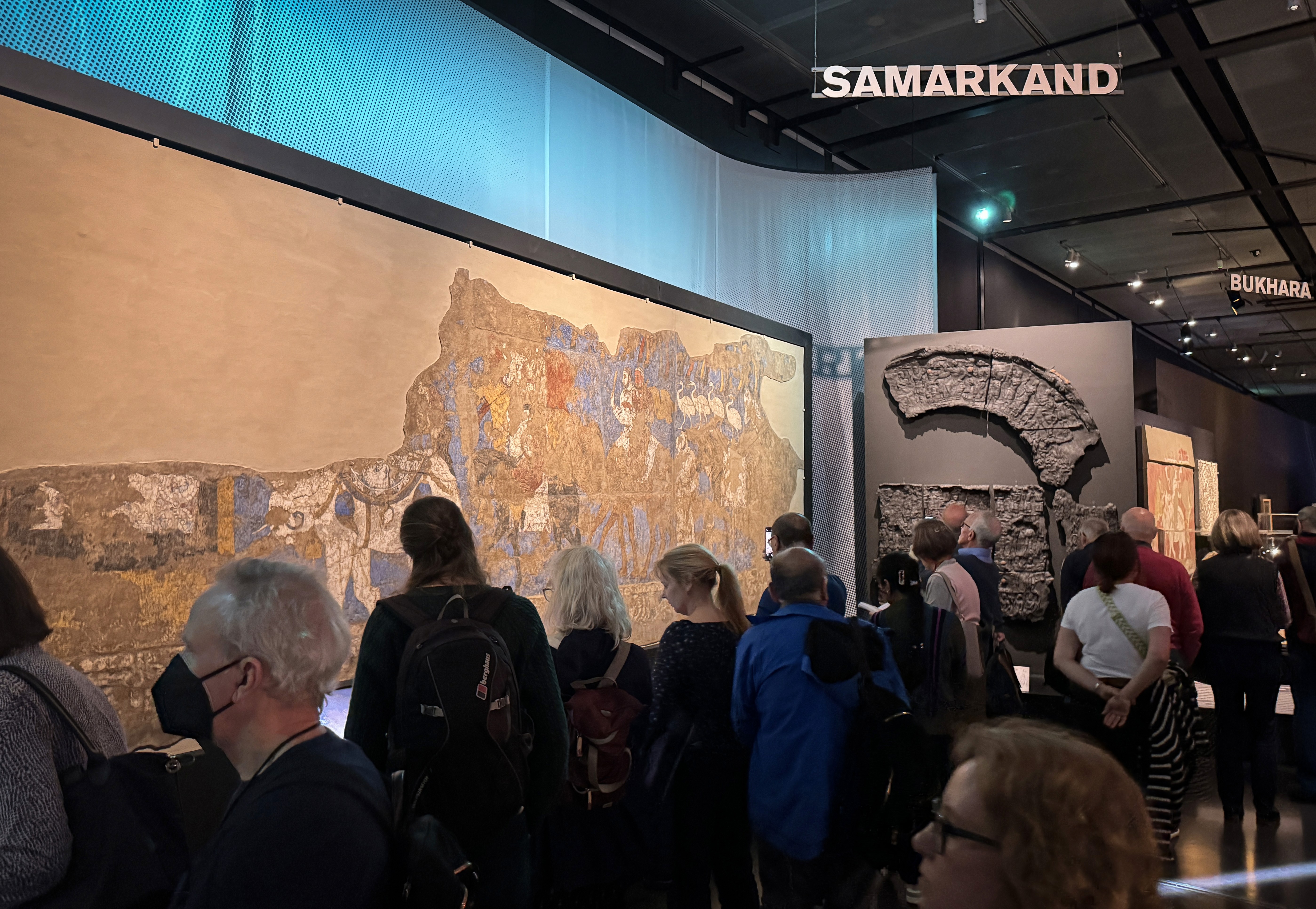
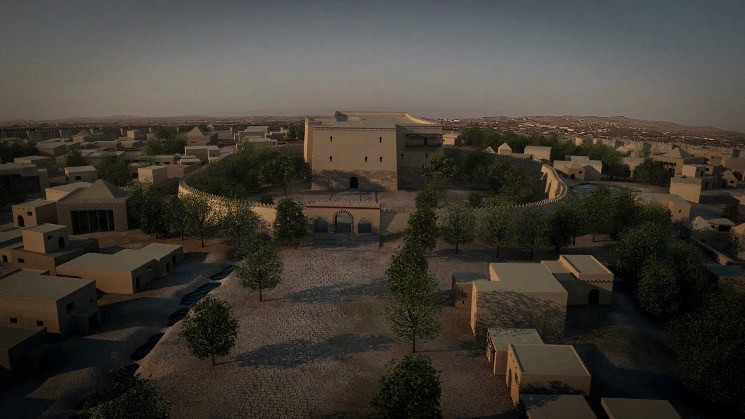
At the center of this expansive narrative stood Samarkand—a pivotal crossroads where trade, diplomacy, religion, and ideas converged between East and West. Reflecting this historical significance, Samarkand was featured as one of the exhibition’s central sections.
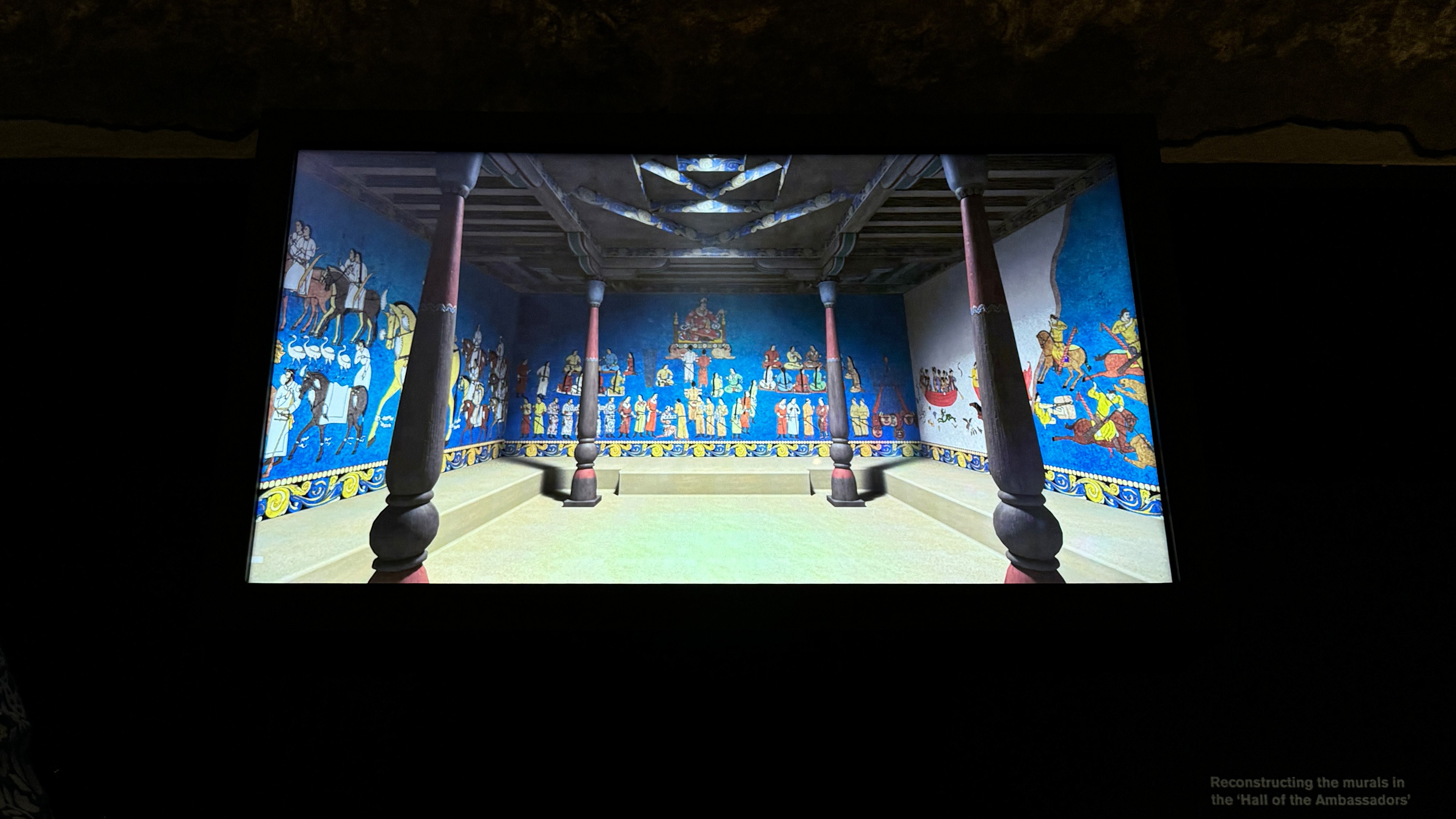
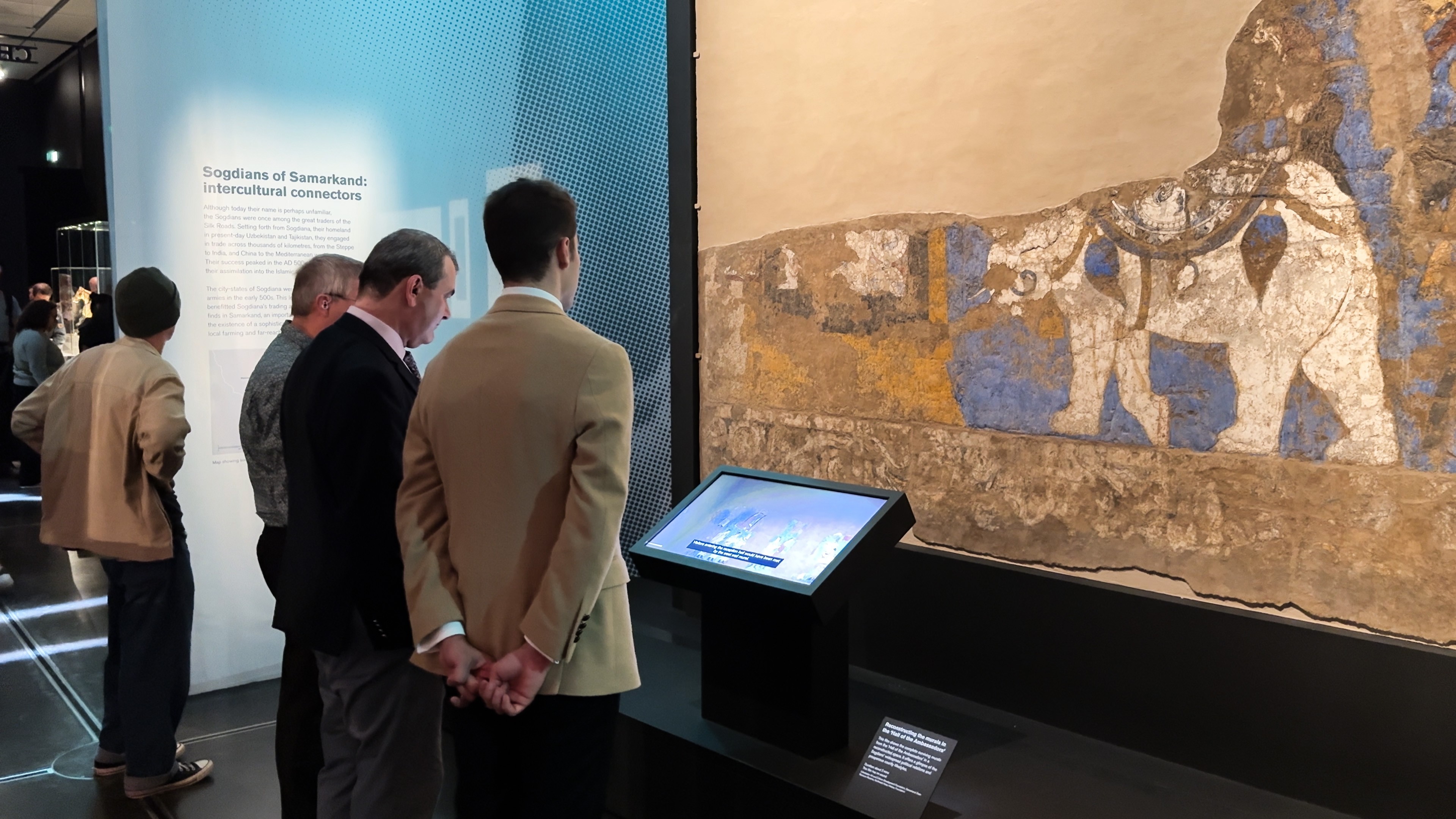
Within this section, the Afrasiab Palace Murals were exceptionally presented in their original form, offering a rare visual record of one of the Silk Roads’ most influential urban centers. However, due to centuries of deterioration and fading, the original murals alone made it difficult to fully grasp their complete composition and iconographic meaning.
To address this, TRIC’s digital restoration was exhibited alongside the original work, providing complementary visual information—including scenes, colors, and contextual details that are no longer clearly visible in the physical artifact—thereby enhancing visitors’ understanding of the mural.
The digital restoration combined multiple layers of methodology, ranging from faithful reconstruction based on surviving evidence to carefully considered conservative restoration approaches. Grounded in archaeological research, pigment and color analysis, and comparative historical studies, the project enabled the original artifact and digital interpretation to function together as a unified narrative, enriching the overall interpretive experience of the exhibition.